

薬剤師の災害対応に体験を提供——第13回 日本災害医療薬剤師学会 学術大会XR展示報告

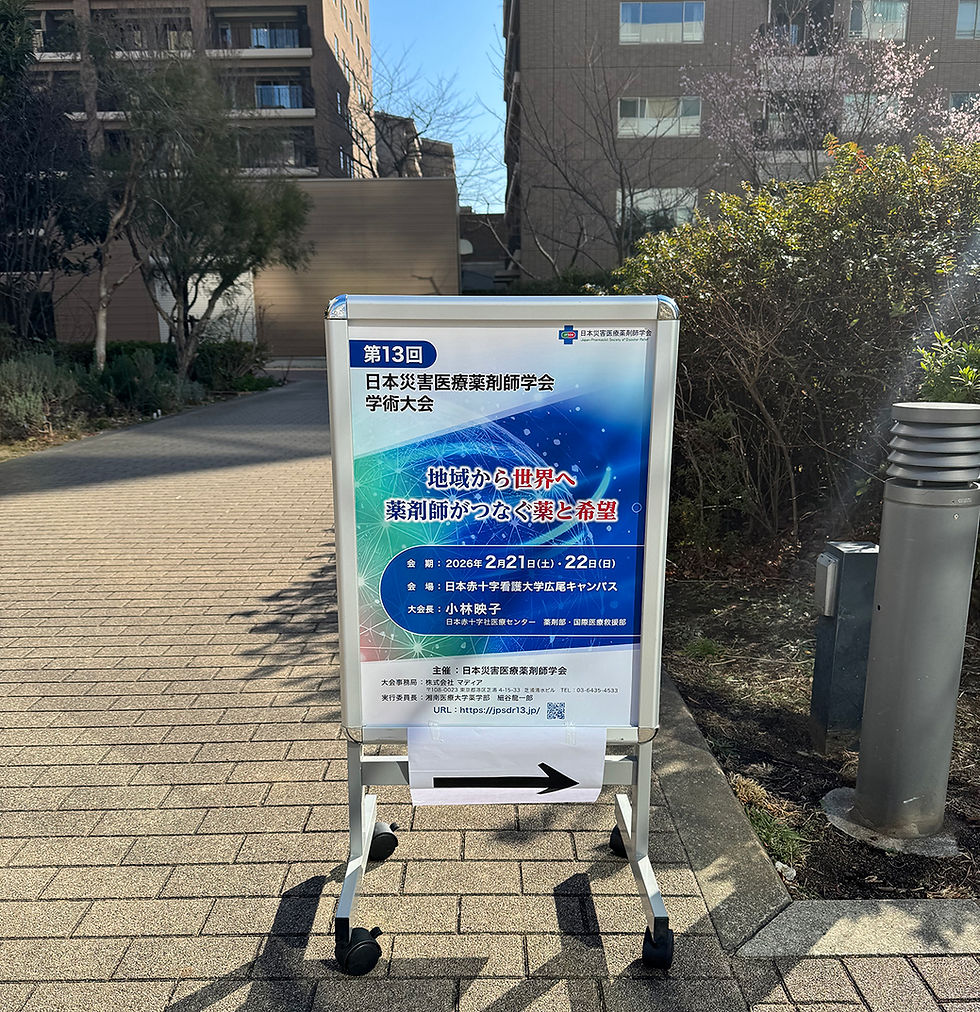
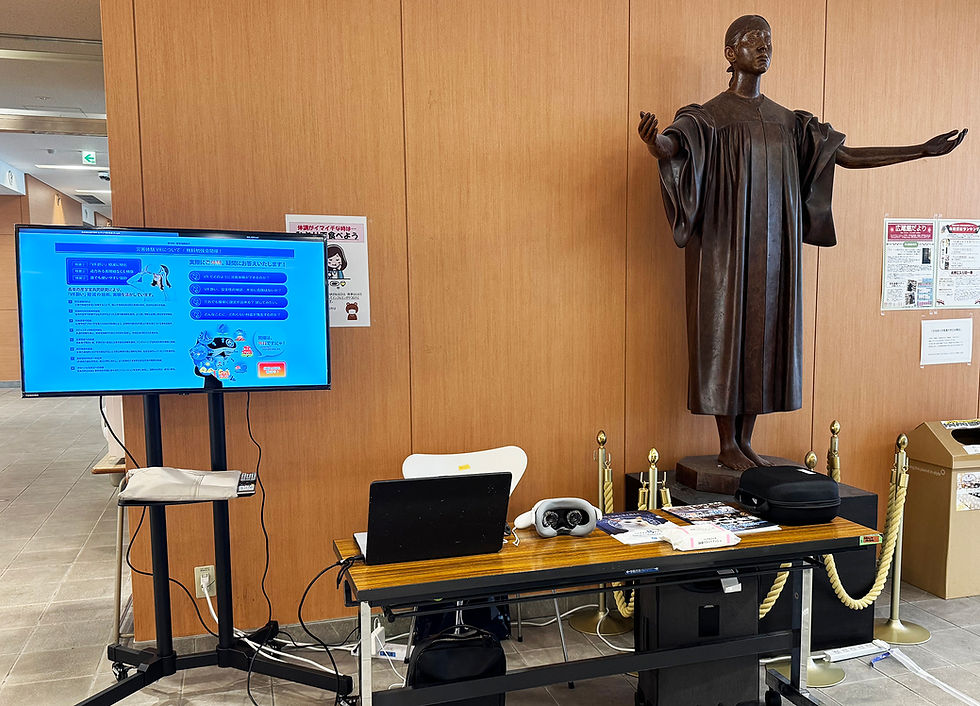
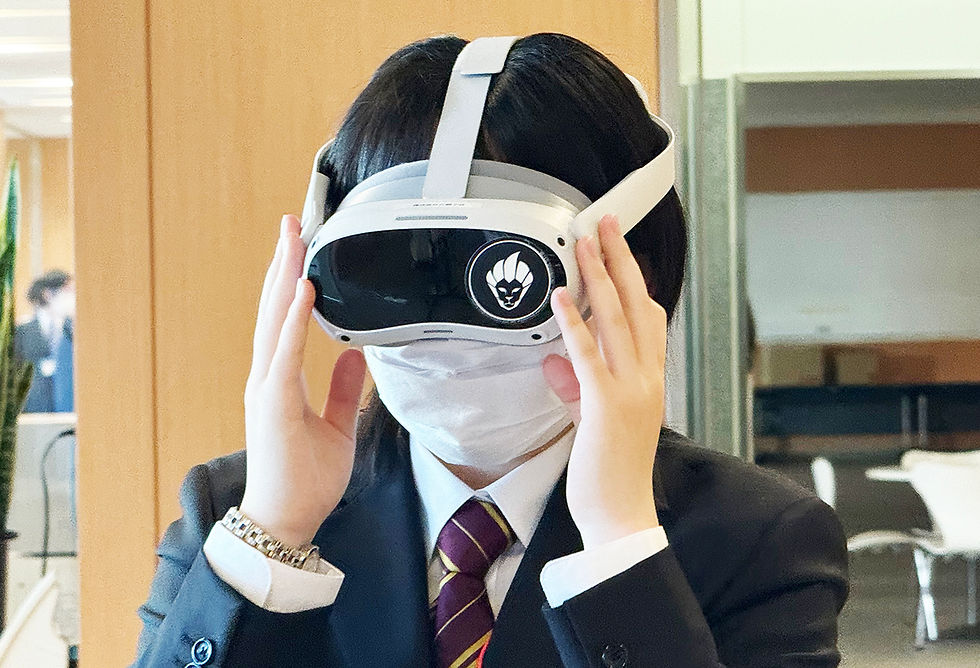
2026年2月21日(土)・22日(日)、東京都渋谷区・広尾(日本赤十字看護大学 広尾キャンパス)で開催された「第13回 日本災害医療薬剤師学会 学術大会」にて、株式会社白獅子は災害・公衆衛生領域のVRコンテンツを展示しました。
大会テーマは「地域から世界へ-薬剤師がつなぐ薬と希望」です。
会場には全国から薬剤師の皆様が集い、能登半島地震をはじめ災害現場に関わられた医師の方々の講演もあり、現場知と課題が交差する、密度の高い2日間となりました。
私たちのブースにも、講演を聴講された方々が多く立ち寄ってくださり、「現場で本当に起きる判断の遅れ」「優先順位の崩れ」「手順の抜け」を、教育ではなく“危機管理(リスクマネジメント)”としてどう下げていくか、具体的な対話が生まれました。
「わかる」を「できる」へ—“行動変容→習慣化”を設計するという考え方
災害医療・災害薬事の領域では、知識があることと、混乱下で“実際に動けること”の間に乖離が生まれます。
そこで私たちは、VRを単体の教材として完結させるのではなく、判断速度と行動の再現性を上げるための「運用(回し方)」まで含めて設計し、現場で回る形へ落とし込みます。
ブースでは、これまでの医療VR/災害体験VRで培ってきた設計思想(See, Change, Act=行動変容→習慣化)とともに、
どこで判断が遅れやすいか
なぜ手順が抜けるのか(情報負荷・心理負荷・役割の交錯)
それを訓練でどう“再現”し、どう“修正”するかを、体験と振り返りのセット
上記について展示を通して説明しました。
展示した主なコンテンツ
1)薬局の「地震直後」から「避難」までを切れ目なくつなぐVR
薬局は災害時、来局者対応・在庫・情報が一気に集中する現場です。今回展示したVRは、地震発生の瞬間から、安全確認/二次災害回避、止める・守る・持ち出すの判断順序、そして避難ルートの意思決定までを、体験者が自分で考える構造として設計しています。
▷ 『薬局地震VR』については、こちらをご覧ください。
2)感染症対策VR(災害時の公衆衛生も“危機管理”として捉える)
避難所や臨時施設では感染対策の難易度が跳ね上がり、クラスターは医療逼迫だけでなく事業継続そのもののリスクになります。
感染症対策VRは、岡山大学病院(感染症内科萩谷医師、感染制御部)との共同研究により開発し、ウイルス増殖リスクと手指衛生の重要性を「体験」として伝えることで、意識変容と具体的な行動変容を促す設計です。
▷ 『感染症対策VR』については、こちらをご覧ください。
3)薬剤師教育VR「KimBen pharma VR(KimBenFarma)」の開発・実装(Medswell社)
薬学教育・臨床判断力の育成に向け、Medswell社の取り組み(KimBen pharma VR)についてもご紹介しました。
薬剤・薬学教育に関する専門知見はMedswell社が、VRシステム・技術的実装は白獅子が担い、両者の専門性を接続する形で、実装可能性と教育価値の両立を目指しています。 ▷ 『KimBen pharma VR』については、こちらをご覧ください。
私たちは「技術で何を解決するか」を明確にします
私たちは薬事・医療の専門職ではありません。
その前提に立ったうえで、白獅子が提供できる価値は、専門家の知見を“現場で再現できる訓練体験”へXRの技術を用いて翻訳し、組織の初動と判断の質を上げることです。
VR/ARで「判断が揺れる状況」を再現する
体験後の振り返りで、判断の根拠と優先順位を言語化する
現場の運用(研修の回し方・導入設計)まで含めて定着させる
この一連の設計によって、教材としての理解に留めず、「できる」へ接続していきます。

今後に向けて—災害医療・災害薬事の“標準化”と“継続運用”へ
今回の展示を通じて、薬局・病院・行政・教育機関それぞれが抱える課題が、現場の言葉で共有されました。
能登半島地震(令和6年)を含む災害の教訓は、時間の経過とともに風化しやすい一方で、次の災害は待ってくれません。
私たちは、レンタル/研修導入/研究活用(評価設計・改善サイクル)までを含め、災害時の判断と行動を「続く仕組み」にしていく支援を強化していきます。


謝辞
このたび、貴重な機会へご招待くださった 兵庫医科大学 危機管理医学講座の渡邉 暁洋先生、運営をご支援くださった事務局の皆様、そしてご来場のうえVR体験と対話にお付き合いくださった皆様に、心より御礼申し上げます。
また大塚製薬様をはじめ、展示会場でのご支援、交流・情報交換をしてくださった関係者の皆様にも深く感謝申し上げます。
Title
Providing Experiential Training for Pharmacists’ Disaster Response — XR Exhibit Report from the 13th Annual Meeting of the Japan Society of Disaster Medicine Pharmacy
On February 21 (Sat) and 22 (Sun), 2026, at the 13th Annual Meeting of the Japan Society of Disaster Medicine Pharmacy, held at the Hiroo Campus of the Japanese Red Cross College of Nursing (Hiroo, Shibuya City, Tokyo), Snowlion Inc. exhibited VR content for the fields of disaster medicine and public health.
The theme of the congress was: “From Local Communities to the World — Pharmacists Connecting Medicine and Hope.”
Pharmacists from across Japan gathered at the venue, and there were also lectures by physicians who have been involved in disaster response in the field, including the Noto Peninsula Earthquake. It became two highly intensive days where practical knowledge and real-world challenges intersected.
Many attendees who had listened to the lectures also stopped by our booth, where concrete discussions emerged on how to reduce “decision delays that truly occur on site,” “collapse of prioritization,” and “missed steps”—not merely as education, but as a matter of crisis management (risk management).
From “Understanding” to “Being Able to Act” — Designing Behavior Change and Habit Formation
In the domains of disaster medicine and disaster pharmaceutical services, a gap often arises between “having knowledge” and “being able to act” under chaotic conditions.
That is why we do not position VR as a standalone teaching material. Instead, we design it together with the “operational method” (how it is actually run and used) to increase decision speed and reproducibility of actions, and to ensure it functions effectively in real settings.
At the booth, based on our design philosophy cultivated through medical VR and disaster-experience VR (See, Change, Act = behavior change → habit formation), we explained—through a combined set of hands-on experience and structured debriefing:
where decisions tend to be delayed,
why procedural steps are missed (information overload, psychological load, and role conflicts), and
how such situations can be “reproduced” in training and then “corrected.”
Key Content Exhibited
1) VR that Seamlessly Connects “Immediately After an Earthquake” to “Evacuation” in a Pharmacy Setting
During disasters, pharmacies become environments where patient flow, inventory issues, and information demands converge all at once. The VR we showcased is designed so that participants themselves must think through the sequence from the moment an earthquake strikes: safety confirmation and secondary-disaster avoidance, the order of decisions such as stopping / protecting / taking essential items, and finally decision-making for evacuation routes.
2) Infection Control VR — Viewing Disaster-Time Public Health as Crisis Management
In shelters and temporary facilities, infection control becomes significantly more difficult. Outbreak clusters are not only a cause of medical system strain but also a direct risk to operational continuity.
Our Infection Control VR was developed through joint research with Okayama University Hospital (Dr. Hagiya in Infectious Diseases, and the Department of Infection Control). By conveying viral transmission and proliferation risks, and the importance of hand hygiene as an “experience,” it is designed to promote awareness change and concrete behavioral change.
3) Development and Implementation of Pharmacist Education VR: “KimBen pharma VR (KimBenFarma)” (Medswell)
We also introduced Medswell’s initiative, KimBen pharma VR, aimed at strengthening pharmaceutical education and clinical decision-making skills.
Medswell provides domain expertise in pharmacotherapy and pharmaceutical education, while Snowlion is responsible for the VR system and technical implementation. By connecting these areas of expertise, we aim to achieve both practical feasibility and educational value.
Clarifying “What We Solve Through Technology”
We are not professionals in pharmacy practice or clinical medicine.
With that premise, the value Snowlion provides is clear: using XR technologies to translate experts’ knowledge into training experiences that can be reproduced in real settings—thereby improving the quality of initial response and decision-making within organizations.
Specifically, we design learning and implementation by:
reproducing situations in VR/AR where decision-making becomes unstable or uncertain,
verbalizing the rationale and priorities behind decisions through post-experience debriefing, and
ensuring adoption and continuity through on-site operations (how training is run and how introduction is designed).
Through this integrated approach, we move beyond “understanding as learning material” and connect it to the capability to “actually do.”
Looking Ahead — Toward Standardization and Sustainable Operation in Disaster Medicine and Disaster Pharmacy
Through this exhibition, challenges faced by pharmacies, hospitals, government agencies, and educational institutions were shared in the language of the field.
Lessons from disasters—including the Noto Peninsula Earthquake (2024)—are prone to fading over time, yet the next disaster will not wait.
We will further strengthen our support to turn disaster-time decision-making and action into systems that “continue”—including rental options, training implementation, and research utilization (evaluation design and continuous improvement cycles).
Acknowledgements
We would like to express our sincere gratitude to Professor Akiyo Watanabe of the Department of Crisis Management Medicine, Hyogo Medical University, for inviting us to this valuable opportunity; to the conference secretariat for their operational support; and to all attendees who visited our booth and engaged in VR experiences and discussions.
We also extend our deep appreciation to Otsuka Pharmaceutical and all related organizations and individuals who supported us at the exhibition venue and kindly exchanged insights and information with us.


コメント